

AI tuition apps are making personalised learning, once limited to private tutoring, accessible to every student by using adaptive algorithms, conversational AI, and predictive insights.
Introduction
AI tuition apps are changing how students learn by delivering personalised support at software scale. Traditionally, only a few could access private tutors, but AI changes the equation: adaptive algorithms, natural language processing, and generative models allow apps to respond to each learner’s strengths and struggles in real time, bringing the benefits of AI in education to the masses.
In this article, we’ll trace the evolution of personalised learning, unpack the AI innovations enabling this revolution, highlight real-world examples of tuition platforms leading the charge, and explore what’s happening “under the hood.” Finally, we’ll discuss how DevLabs by AngelHack can help you to build scalable, secure AI-powered education products.
AI in Personalised Education: Key Innovations
AI is reshaping tutoring by enabling truly individualised experiences. Four innovations stand out:
1. Adaptive Learning Algorithms: Matching Your Level For Growth
Adaptive algorithms dynamically adjust content and pacing based on performance【elearningindustry.com】. Every response, hesitation, or click feeds into the system, creating a detailed learner profile.
- Struggling with fractions? The system provides extra practice and alternative explanations.
- Excelling at algebra? It moves you ahead to more challenging material.
This ensures students remain in the optimal challenge zone. Research shows such adaptive systems improve retention and mastery rates【elearningindustry.com】.
2. Natural Language Processing: Conversational Tutors That Feel Human
AI’s progress in Natural Language Processing (NLP) has enabled tuition apps to engage students in human-like dialogue. From chatbots to full-fledged tutors, NLP powers 24/7 interactive support【elearningindustry.com】.
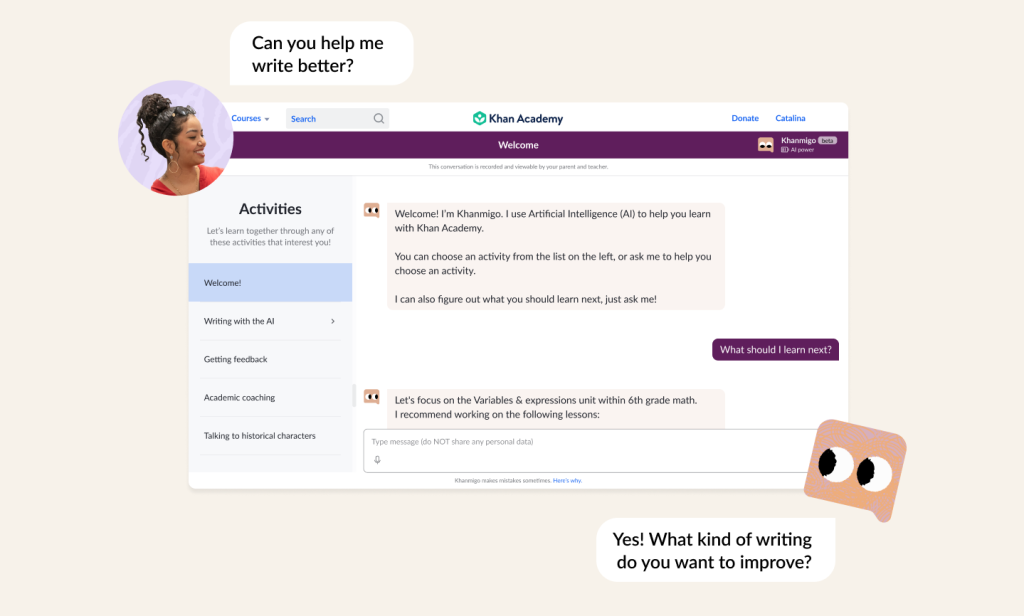
Take Khan Academy’s Khanmigo, built on GPT-4. Rather than spoon-feeding answers, it engages learners Socratically: asking probing questions, nudging them toward solutions, and even role-playing as historical figures【blog.khanacademy.org】.
Voice-enabled NLP adds accessibility, particularly for younger learners. With this, students essentially gain an always-available tutor, patient, responsive, and endlessly adaptable.
3. Generative AI: Personalised Content & Instant Feedback
Generative AI models such as GPT-4 can both create content and deliver instant feedback【research.aimultiple.com】.
- Content creation: These models generate tailored practice problems, reading passages on learners’ interests, or simplified explanations of difficult concepts.
- Feedback: Essays and open-ended responses can be evaluated instantly, with personalised comments on structure, grammar, and reasoning.
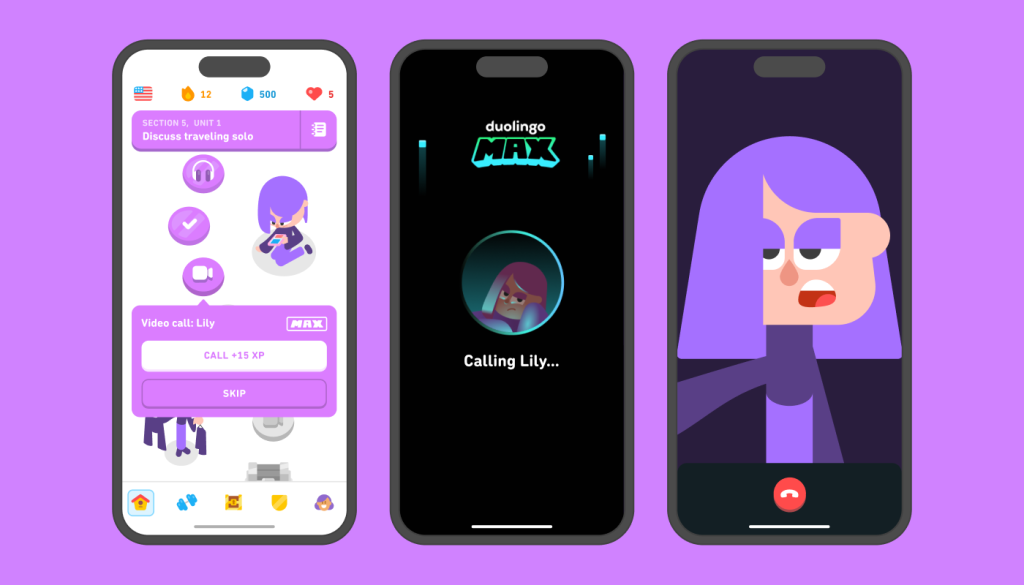
For example, Duolingo Max uses GPT-4 to provide simulated conversations and explain errors in natural language【research.aimultiple.com】. Meanwhile, Turnitin’s Draft Coach helps students refine writing before submission.
This combination of real-time content generation + formative feedback accelerates learning and reduces teacher workload.
4. Predictive Analytics: Support and Early Intervention
By analysing vast learning data, predictive analytics identifies patterns and forecasts outcomes.
- Detects at-risk learners early, e.g. a student trending downward in algebra fundamentals.
- Recommends personalised next steps based on profiles of similar learners【elearningindustry.com】.
- Provides dashboards for educators, showing both cohort-level bottlenecks and individual risk alerts.
In short, predictive analytics transforms EdTech from reactive (responding to errors) to proactive, offering interventions before failure occurs.
Case Studies: AI Tuition Platforms in Action
Squirrel AI Learning (China)
An adaptive tutoring platform specializing in mathematics and sciences, Squirrel AI creates personalized learning journeys for students. In a single challenge, the system generated over 108,000 unique learning paths for 112,000 learners, boosting mastery levels from 41.6% to 85.1% in just two hours【prnewswire.com】. Powered by more than ten billion learning interactions, it offers fine-grained, data-driven personalisation.
Khan Academy – Khanmigo (USA)
Khanmigo is an AI-powered tutor and assistant that supports math, science and humanity subjects. It provides conversational tutoring to students and helps teachers with lesson planning and grading. Khanmigo “encourages productive struggle,” guiding learners to think critically rather than simply supplying answers.
Duolingo Max (USA)
Focused on language learning, Duolingo Max leverages GPT-4 for immersive conversational practice and real-time feedback. The “Explain My Answer” feature helps users understand their mistakes, resulting in higher engagement and satisfaction, and driving course improvements【research.aimultiple.com】.
Quizlet Q-Chat
Quizlet Q-Chat offers interactive study sessions tailored for subjects like language, science, and history, transforming flashcard review with adaptive quizzes, stories, and comprehension checks. Powered by conversational AI, it engages learners through dialogue to reinforce knowledge and prompt deeper understanding.
AI Tuition: Key Components
Building these platforms requires the interplay of engineering, pedagogy, and data science. Key components include:
- Data Collection: Every learner interaction (answers, timing, queries) becomes data for modelling.
- Learner Modelling: Machine learning estimates mastery levels, identifying strengths and weaknesses. Advanced systems (like Squirrel AI) are trained on billions of interactions【prnewswire.com】.
- Content Mapping & Recommendation: Knowledge graphs map curriculum objectives to content. AI chooses the next activity that maximises learning gain.
- Personalised Content Delivery: The system provides pre-tagged or AI-generated exercises, videos, or conversations, customised to each learner.
- Feedback Loops: Instant grading and personalised feedback keep students on track【elearningindustry.com】.
- Teacher Dashboards: Predictive analytics give instructors actionable insights for intervention.
The Future of Personalised Learning
As AI brings personalized education within reach for all, the learning experience is transforming for both students and teachers:
- Equity: High-quality personalised tutoring is no longer restricted to the privileged few.
- Efficiency: Learners spend time where they need it most, accelerating progress.
- Empowerment: Teachers can shift from repetitive grading to deeper mentorship.
- Scalability: Platforms can serve millions without sacrificing personalisation.
Yet challenges remain. A significant hurdle is protecting sensitive student data, as privacy and regulatory compliance are essential. Another major concern is algorithmic bias, which can unintentionally reinforce inequalities, and digital equity, as unequal access to technology risks a digital divide.
Additionally, there’s the risk of over-reliance on automation, which could diminish teacher-student interactions. Balancing AI with human connection is vital. For trust and successful adoption, AI decision-making must be transparent, and thorough teacher training is needed, along with managing costs and ethical considerations.
Building Tuition Apps with DevLabs by AngelHack
AI tuition apps are transforming personalised learning: from adaptive algorithms that tailor every lesson, to conversational tutors, to generative AI providing instant feedback. For learners, this means more engagement and faster mastery. For educators, it means new insights and time freed for meaningful mentorship.
However, the aforementioned challenges must not remain unnoticed. At DevLabs by AngelHack, we help EdTech innovators face these hurdles head-on by building AI tuition apps that are:
- Ethical by design: Development of algorithms that minimize bias with diverse training datasets.
- Data-secure: Robust pipelines for data protection and regulatory compliance.
- Scalable and accessible: Infrastructure solutions promoting digital equity for all users.
- Balanced: Guidance on developing features that enhance, not replace, teacher-student interaction.
- Transparent: Clear AI decision-making systems that build user trust.
Build the next generation of intelligent platforms that truly give every learner the personalized education they deserve. Let’s discuss how DevLabs can help you make that a reality, starting with a discovery call!
Build your own AI-powered Tuition App
We’re ready to help EdTech innovators build the next generation of intelligent tuition platforms, ones that truly give every learner the personalised education they deserve.
Book a Free ConsultationBook a free consultation with us or contact elle@angelhack.com
References
Tyton Partners. Personalized Learning: A History and Context. Tyton Research, 2020.
EdTech Review. Adaptive Learning with AI: Transforming Education, 2024.
UNESCO MGIEP. AI and the Future of Personalized Learning. Report, 2023.
EdSurge. Khan Academy Pilots GPT-4 as Khanmigo Tutor, March 2023.
Duolingo. Introducing Duolingo Max, Powered by GPT-4, 2023.
Squirrel AI Learning. Case Study: Adaptive Learning in China, 2021.
Turnitin. Draft Coach: AI-Powered Writing Feedback, 2022.
EdTech Magazine. How Predictive Analytics is Changing Education, 2022.
The Hechinger Report. AI in Education: Promise and Pitfalls, 2023.


